
Key Takeaways
- A family trust is a trust created by an individual who names family members as beneficiaries to receive specified trust assets.
- To contest a family trust, an interested party must have grounds for contesting a trust by being a beneficiary of a trust, a legally recognized heir, or a successor trustee.
- Legal grounds for disputing a family trust include undue influence, fraud, a lack of mental capacity, and more.
- To dispute a family trust, you should consult an attorney and gather evidence supporting your dispute to petition the court.
Introduction
A trust is a valuable estate planning tool that empowers you to protect your most valuable assets for the benefit of your family. However, given the high stakes involved in distributing an individual’s assets to their heirs, there may be circumstances where a beneficiary or interested party disagrees with the terms or administration of a trust and seeks a legal dispute.
If you believe that a family trust fails to reflect the wishes that its creator intended, such as being compromised by instances of fraud or undue influence, you may be able to legally contest it. Other reasons for disputing a trust include beneficiaries believing they are entitled to a larger share of an inheritance or believing that the trustee is failing to administer the trust responsibly.
Still, only certain parties can dispute a family trust, so it’s crucial to understand the requirements for initiating a trust dispute and the legal grounds necessary to do so. This guide offers insight into how to legally dispute a family trust and what you can expect from the process.
What Is a Family Trust?
A family trust is a type of trust created by an individual or estate to protect and manage assets for family members identified as beneficiaries. These types of trusts often name spouses, children, grandchildren, nieces, nephews, or siblings as beneficiaries. An individual often sets up a family trust in order to transfer wealth within their family and provide a reliable inheritance for their heirs.
The creator of a family trust, known as the settlor, designates a trustee who is responsible for managing and distributing assets to identified beneficiaries. Establishing a family trust offers several benefits, such as asset protection against creditors, reduced estate taxes, and the ability to avoid probate.
A family trust may be either revocable or irrevocable. A revocable trust can be altered or revoked by the settlor at any point during their lifetime, whereas an irrevocable trust can only be changed with the approval of all beneficiaries and the trustee. A revocable trust allows for more flexibility in adjusting one’s estate plan, while an irrevocable trust provides greater asset protection at the expense of less flexibility.
Related Case Result: Client Secures Fair Inheritance and Prevents Trustee’s Exploitation of Family Trust
The Role of a Trustee and Beneficiaries
The two most important parties in a trust agreement after it is created are the trustee and the beneficiaries. A trustee is responsible for managing and administering all real estate, financial assets, and personal property belonging to the trust, preserving and protecting these assets, and then distributing them to beneficiaries according to the instructions of the trust document. The trustee is identified by the grantor who created the trust.
Meanwhile, the beneficiaries of the trust are individuals identified by the trust creator who stand to inherit assets from the trust. Beneficiaries may be family members or friends of the grantor, who the grantor has chosen to inherit, and are listed in the trust agreement.
California

Texas

Understanding Family Trust Disputes
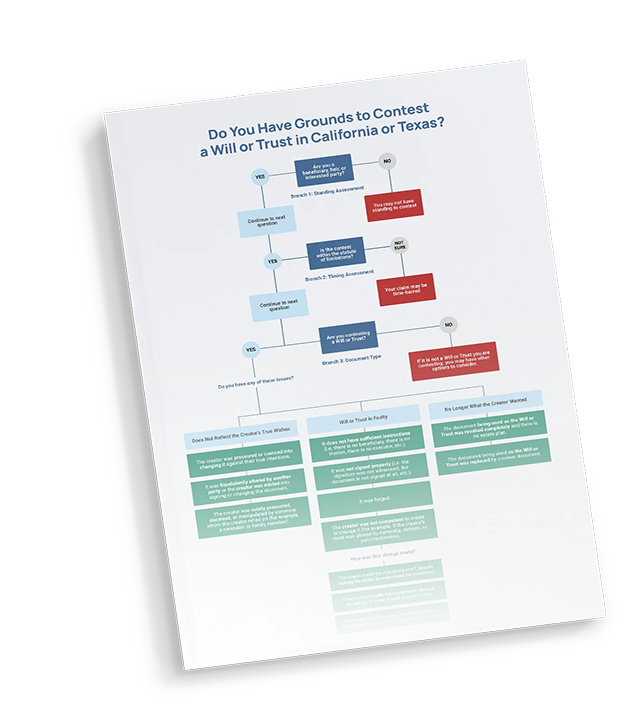
An interested party can dispute a family trust at any point they feel like the trust is invalid or does not represent the creator’s interests. To contest a family trust, you must have a legally recognized reason to challenge the validity of the document and the standing to bring such a challenge. Because revocable trusts remain modifiable during the settlor’s lifetime, a person who is named as a beneficiary in a revocable trust may not be able to bring a dispute concerning the terms of the trust until it becomes irrevocable. The following matters are some of the valid and most common reasons for disputing a trust.
Undue Influence
Undue influence occurs when a bad actor uses malicious tactics to manipulate or influence a vulnerable individual into changing the terms of their trust for their own personal gain. An interested party in a trust can dispute the validity of the trust or certain changes to it if they believe the trust does not represent its maker’s true intent.
Examples of undue influence over a grantor include using guilt or emotional manipulation, threatening to withhold care, or isolating them to influence changes to a trust that unjustly benefit the bad actor.
Fraud
A trust procured or edited through fraud is considered invalid, providing grounds for a dispute. Fraud may include instances such as a beneficiary making changes to a trust document without the grantor’s permission, hiding a trust document from other parties, and misleading the grantor into signing a document they do not understand. A trustee may commit fraud by mismanaging trust assets, misrepresenting the value of trust assets, or mixing trust assets with their own personal assets.
Forgery or Improper Execution of Trust Documents
Similar to fraud, suspected forgery is grounds for invalidating a trust document. Forgery may involve someone creating a fake trust document or trust amendment while fraudulently presenting themselves to be the grantor or forging the grantor’s signature without their knowledge.
In cases where the trust documents were not legally executed under the requirements of the state where they were created, the trust may also be invalidated. For example, according to California state law, a trust needs to contain some amount of “trust property.” If the state’s specific criteria are not met, the trust can be contested and ultimately considered invalid. In the above example, if a trustor created a trust that did not identify any assets to be held within that trust, then its validity could be contested.
Lack of Mental Capacity
At the time of signing and executing a trust, an individual must have the mental capacity to understand the assets that belong to their estate, the fact that they are creating a legally binding trust, and the consequences of their decisions. This ability to understand the consequences of one’s actions and create a valid estate plan is known as testamentary capacity, and courts will invalidate any plan that can be proven to have been created without it.
Examples of a lack of capacity often include cases of dementia or cognitive decline that prevent a person from understanding the decisions they are making. When an interested party suspects that any of these conditions may have impaired the trust creator’s capacity to be of sound mind when executing the trust, the party may have grounds to contest the document.
Breach of Fiduciary Duty by the Trustee
A fiduciary has the responsibility of acting in the best interests of the trust at all times. If a trustee fails to uphold their fiduciary duty, beneficiaries have a right to dispute the administration of the trust. Common examples of breach of fiduciary duty include failing to communicate with trust beneficiaries, misappropriating trust assets, engaging in conflicts of interest, and making irresponsible investment decisions, to name just a few.
If the trustee is negligent or malicious in their management of the trust, such as stealing estate assets or accruing interest or late fees by not paying property taxes, they may be held personally liable for refunding any losses to the trust. In severe cases, successfully proving breach of fiduciary duty could result in the trustee being removed from their position.
Ambiguities or Errors within the Trust Instrument
When a trust instrument contains ambiguities or errors that muddy the intent of the grantor, an interested party may contest a trust to seek clarification of these terms or obtain court guidance on how to proceed. A trust contest can help to clarify the intent of the grantor using available evidence, such as previous iterations of an estate plan or past communications with a financial advisor. A successful contest can result in the trust being amended to terms that better align with previous communications or errant provisions being entirely removed.
Improper Trust Amendments or Revocations
An invalid trust amendment or revocation can provide grounds for a contest in instances where the trust creator lacked testamentary capacity to reasonably understand the changes they made. An interested party with a stake in the trust can gather evidence like medical records or expert witness testimony to pursue a trust contest.
Who Has the Standing to Dispute a Family Trust?
Anyone who is considered to have a vested interest in the trust, as well as a financial stake in the outcome of a trust dispute, may have standing to dispute a family trust. For example, a legal heir who was excluded as a beneficiary from a trust and suspects undue influence may have standing, as contesting the trust and invalidating the document could result in the heir receiving a financial share of the inheritance through state intestacy laws.
On the contrary, if a trustee who is not also a beneficiary suspects that the trust creator did not have testamentary capacity to amend a trust, they may not have legal grounds to contest the trust because they do not have a financial interest in the outcome of such a contest.
Some parties who often have standing include:
- Beneficiaries
- Trustees who may also be beneficiaries
- Legal heirs under state intestacy laws who are not identified as beneficiaries
- Creditors who could benefit from the contest
Interested parties with grounds to contest a trust, given one of the reasons above, can typically contest a trust. If you are unsure whether you have standing to dispute a family trust, you should consult a skilled trust litigation attorney to discuss your position in the case and any available evidence you may have.
The Steps for Disputing a Family Trust
Once you have determined that you have grounds and standing for disputing a family trust, it’s important to consider the steps involved in following through on your dispute.
First Steps: Gathering Information and Seeking Counsel
The first steps in disputing a family trust involve building your case before taking it to the courts.
1. Obtain a Copy of the Trust
Upon receipt of a copy of the trust, you should review the document to ensure that it reflects all of the terms that the grantor communicated to you after they created the document. If you have not received a copy of the trust document, request it from the trustee. The trustee has a duty to provide a copy of the trust instrument upon the request of a trust beneficiary in California, but it is best practice for them to mail a copy of the trust along with the Notification by Trustee (16061.7 Statutory Notification) at the beginning of the trust administration process.
Be sure to review the trust for any specific terms related to disputing the trust. For example, a trust may include a no-contest clause used to discourage frivolous contests. Although no-contest clauses are not always enforceable, this is an important consideration to discuss with an attorney.
Beneficiaries may also consider requesting trust accountings and reviewing them with scrutiny to assess whether the trustee is making responsible decisions during trust administration.
2. Compile Information About Your Dispute
Prepare all important information for your trust dispute upfront so that you can have it readily available to present to the court. Gather information about your grounds for a dispute and the evidence you have to suspect that you have grounds for a dispute.
Important information to prepare for the court may include:
- A copy of the trust instrument that contradicts previously communicated wishes of the grantor
- An amendment to a trust instrument towards the end of the trustor’s life due to a lack of capacity
- Evidence of a relationship of an estranged child who was excluded from the trust despite a right to inherit through state intestacy laws
- A caretaker who became close to the grantor toward the end of their life, while isolating them from family members and friends
- A trust accounting that demonstrates missing estate assets
Given your initial concerns, supplement this information with as much evidence as you can to back up your grounds to contest the trust. Seek evidence, such as witness testimony, to verify claims of undue influence through questionable relationships, or transactions included in trust accounting that demonstrate irresponsible investments.
3. Consult a Trust Attorney
A trust attorney is a critical resource for ensuring that you follow all necessary legal processes for protecting your interests in the trust, so you should seek legal counsel immediately. An attorney will seek to help you resolve a conflict as soon as possible, through whatever means necessary.
When seeking a reliable trust litigation attorney, be sure to consider an attorney who has extensive experience in managing trust disputes and has a proven track record of success in past cases. Although often overlooked, it is also important to assess whether an attorney demonstrates the sensitivity to understand the emotional complexity of trust dispute cases.
During an initial consultation with your attorney, you should discuss your suspicions necessitating a trust dispute, the evidence you have to support your suspicions, and any valuable context you think would be helpful for your attorney to know. This consultation will allow you to receive more insight into the strength of your case as well as assess your sentiment of the attorney.
Next Steps: Navigating the Legal Process of a Trust Dispute
Upon establishing that you have grounds and standing to contest a trust, you can initiate the formal process for the dispute. Consider the deadline for contesting a trust, as well as the necessary legal steps to initiate the contest.
Related Case Result: Trust Dispute Won for Client Following Father’s Death
1. Verify the Statute of Limitations and Filing Deadlines to Dispute a Trust
The deadline to dispute a trust differs depending on governing state laws. In California, you have 120 days to contest a trust from the date of receiving the Notification by Trustee, signaling the beginning of the trust administration process.
In Texas, the statute of limitations to contest a trust is longer. You have four years from the date that the grounds for contest were discovered or should have been discovered. Given the variability that can exist across state laws, it’s crucial to understand your state’s trust filing deadlines so you can ensure you do not miss your chance to contest the trust. In any case, always consult an attorney as soon as possible to begin preparing your trust dispute.
2. Settle Your Dispute If Possible
When a dispute arises, your attorney will typically suggest settling the dispute outside of court whenever possible. This process often begins with pursuing negotiation or mediation of the dispute, which allows all parties to go before a neutral mediator and seek a mutually agreeable resolution. It typically benefits everyone to avoid the time and costly legal fees of taking a matter all the way to court. Finding a compromise between parties can also help to resolve the matter more quickly and preserve important family relationships before leading to more contentious disputes.
3. Pursue Your Dispute in Court
If mediation proves unsuccessful, you may decide to pursue litigation as a last resort. You can initiate these legal proceedings by filing a petition with the court, which will involve drafting a document that outlines your concerns surrounding the validity of the family trust and explains any evidence you have to support them.
It’s advisable to seek the guidance of an experienced attorney who can help you gather evidence, draft your petition while following the necessary legal guidelines, and advocate for you in probate court. Keep in mind that you can move to mediation at any stage in the process to seek a settlement before resolving the matter in the courts. Even if the matter is in trial, you still have the option to attempt mediation again.
What Happens After Disputing a Family Trust?
The outcomes of suing a family trust can vary on a case-by-case basis. The outcomes depend on the nature of the dispute and the ruling of the court that oversaw the case.
Results may include:
- Removal of the trustee: Most common in breach of fiduciary duty lawsuits and trustee misconduct cases, this involves the removal of the trustee and the appointment of a replacement trustee, typically either the next nominated successor or an independent fiduciary.
- Compensation for financial losses: In cases of trustee negligence or misconduct, the court may order the trustee to compensate the trust for damages. In some cases, you may also be able to seek reimbursement of your legal fees associated with raising the contest if successful.
- Modification of trust provisions: When the probate court rules that provisions of the trust are invalid or unclear, the trust may be modified to exclude those sections while preserving the rest of the document or reverted to a prior iteration of the trust.
- Distribution by intestate succession: If the entire trust is invalidated, asset distribution may be decided according to state intestacy laws, which outline heirs who legally stand to inherit from a deceased person’s estate.
Ultimately, the outcome will depend on the circumstances of the case and the context surrounding it. For a more accurate picture of what you should expect from disputing a family trust, consult a trust litigation attorney with experience in these situations.
Navigate Family Trust Disputes With Confidence With RMO Lawyers
If you are an interested party in a family trust and have valid legal grounds to contest it, it may be worth it to secure your access to your rightful inheritance. If you believe that you have grounds to dispute a trust, it’s advisable to consult an attorney as soon as possible to understand your options. An attorney can help you assess your standing to dispute the trust and navigate the steps of either mediation or petitioning the court.
The trust dispute attorneys at RMO may be able to support you in initiating or navigating family trust contests. With decades of experience, our attorneys are dedicated to seeking a resolution as soon as possible. Whether through mediation or litigation, we will work to secure the best possible outcome while protecting the true intent of the trust creator.
Schedule a consultation with the team at RMO Lawyers to discuss the unique circumstances of your case today.
Frequently Asked Questions
What is a trust dispute?
A trust dispute is any conflict or argument surrounding a trust’s validity, terms, or administration. A dispute may be a disagreement about the inheritance an individual is entitled to, a belief that the trust was invalid, or a concern with the creation or administration of the trust. Trust disputes may be settled through negotiation between interested parties or have to go to the courts to be resolved.
Why do trust disputes typically occur?
Trust disputes typically occur when there are concerns related to the validity of the trust, such as in instances involving claims of undue influence, fraud, breach of fiduciary duty, as well as ambiguous terms in the trust instrument or concerns with the trust administration. Trust disputes can also occur when a beneficiary disagrees with the share of the inheritance they are entitled to according to the trust instructions.
Do I need a lawyer to help with my trust dispute?
An attorney is not absolutely necessary to dispute a trust, but it’s highly advisable to consult a lawyer whenever you suspect an issue with a trust document or its terms. A trust dispute lawyer will assist you in ensuring you understand all your legal options and will offer guidance in pursuing alternative dispute resolution methods, or if necessary, litigation.
How can you avoid family trust disputes?
While it may not always be possible to completely avoid trust disputes, you can take steps to mitigate them, such as creating a clear and comprehensive trust instrument, choosing a reliable trustee, seeking the support of an attorney, and fostering open dialogue if conflicts do occur. Proactive communication with interested parties about trust terms may also mitigate conflicts by keeping all parties on the same page. No-contest clauses may also be used to discourage legal disputes against a trust.
Glossary
Family trust – A family trust is a legal agreement that grants a third party, or fiduciary, the authority to hold and manage assets for the beneficiaries of an estate, who are family members of the trust creator.
Grantor – An individual who creates a trust to specify how they want their assets distributed to named beneficiaries upon their death.
Trust Dispute – A trust dispute is a legal conflict involving the terms of a trust, the actions of a trustee, or the rights of beneficiaries.
Trustee – An individual appointed by a trust to manage and administer trust assets in conjunction with the terms of the trust document.
Testamentary Capacity – A testator’s ability to make sound financial and legal decisions at the time of the creation of their will or trust.