
Home | Alzheimer’s, Dementia & Estate Disputes: A Resource Guide for Families
Alzheimer's, Dementia, and Estate Disputes: A Resource Guide for Families
When someone you love is diagnosed with Alzheimer’s or another form of dementia, the questions come quickly. Can they still sign a will or trust? Who can manage their money? What happens if someone takes advantage of them, or if documents change late in life?
Many of the disputes RMO LLP is asked to resolve begin the same way: a parent’s memory or judgment starts to change, the family isn’t ready, and questions about who is really making decisions surface only after it’s too late to ask.
This guide gathers what we’ve learned in court so you can protect your loved one’s wishes now and know where to turn if a dispute arises.
Key Takeaways
- A diagnosis doesn’t automatically end someone’s legal capacity. What matters is whether they understood the specific decision when they made it.
- The period after a diagnosis is often the best window to review and update estate planning documents while legal capacity remains.
- Powers of attorney, trusts, and advance healthcare directives can often reduce or eliminate the need for a conservatorship, but only if they’re signed while capacity remains.
- Sudden new “helpers,” isolation, and late changes to documents are common warning signs of exploitation.
- If a will or trust was created or changed after cognitive decline became a concern, deadlines to challenge it may be short. Seek legal advice as soon as possible.
November is National Alzheimer's Disease Awareness Month.
All month, we’re sharing practical guidance for families navigating a diagnosis, from capacity and powers of attorney to caregiver disputes and protecting a loved one from exploitation.
Why We Walk
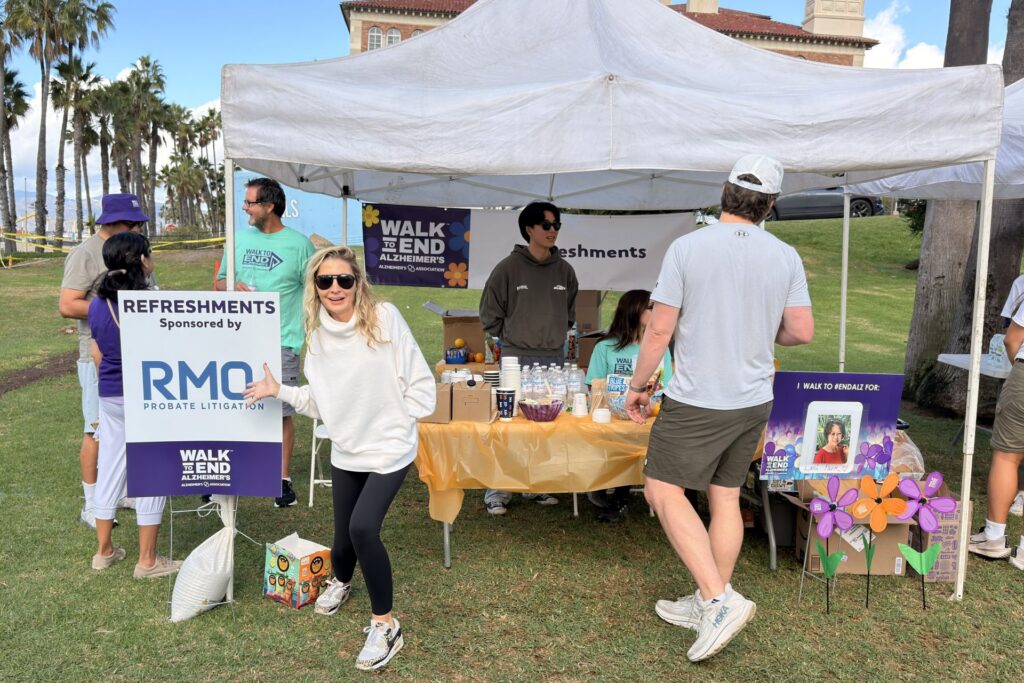
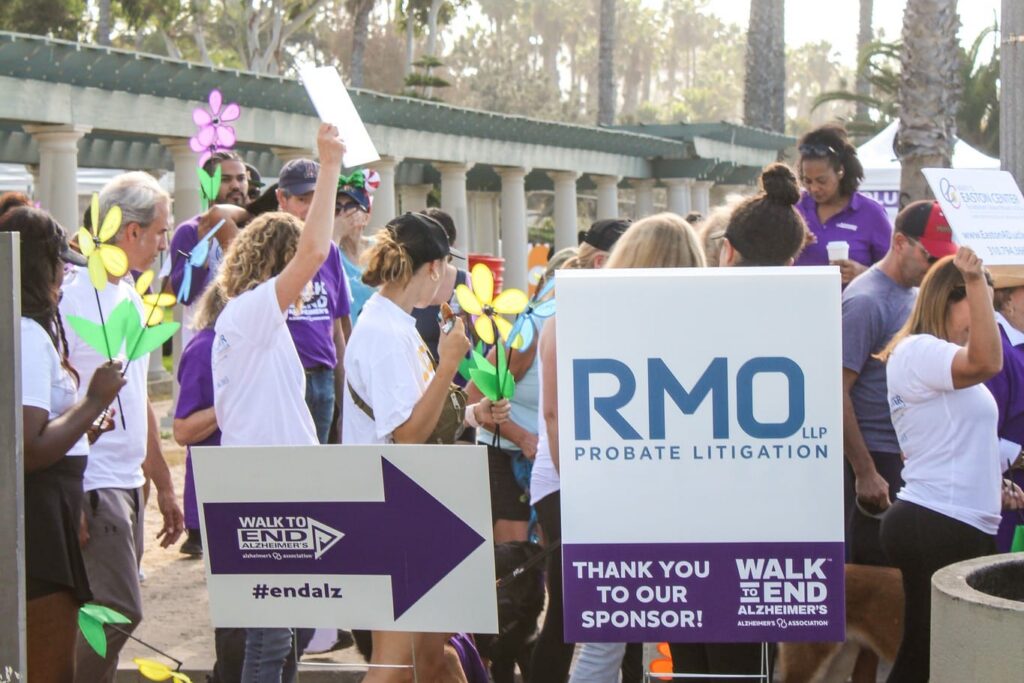
On November 1, team RMO joined families across Southern California at the Walk to End Alzheimer’s in Santa Monica, which RMO is proud to sponsor. Our attorneys see the legal side of this disease every day: families trying to honor a loved one’s wishes while protecting them from harm. Supporting the Alzheimer’s Association’s work on care, support, and research is one more way we can help.











What Families Should Know
Five guides drawn from our blog and thought leadership, ordered the way most families meet these questions: from the diagnosis, to managing money, to protecting a loved one, to what happens after a loss.
The Diagnosis Moment: Why Timing Matters
An Alzheimer’s diagnosis doesn’t automatically end someone’s ability to sign a will, trust, or power of attorney. California law asks whether the person could understand the specific decision when they made it, and the bar differs by document. Because capacity can change from day to day, the months after a diagnosis are often the clearest window to put plans in order.

Managing Assets: Who Can Act, and How
A power of attorney lets your loved one choose someone they trust to manage their affairs without going to court. A conservatorship is court-appointed and court-supervised, and it may become necessary when a person lacks capacity and less restrictive alternatives are unavailable or inadequate. Knowing the difference, and the less restrictive alternatives in between, helps families act before a crisis.

Protecting Against Exploitation
People living with dementia are frequent targets of financial abuse, often by someone they trust. Watch for a sudden new “friend” or caregiver, isolation from family, unexplained withdrawals, and rushed changes to wills, trusts, or deeds. California law gives families tools to stop the abuse and recover what was taken.

Families and Caregivers
Caring for a parent with dementia is hard, and it can strain sibling relationships. Clear communication, good records, and written caregiver arrangements protect the person providing care and reduce the suspicion that often turns into litigation later. Knowing the early signs of declining capacity helps families plan together.

After a Loss: When Documents Changed After a Diagnosis
If a will or trust changed after your loved one’s diagnosis, you may have grounds to challenge it, but a diagnosis alone isn’t proof. Courts look at timing, who was involved, medical evidence, and whether someone exerted undue influence. Deadlines to act can be short.

Short Explainers From Our Attorneys
Free Guides

- Decision Tree
Do You Have Grounds to Contest a Will or Trust?
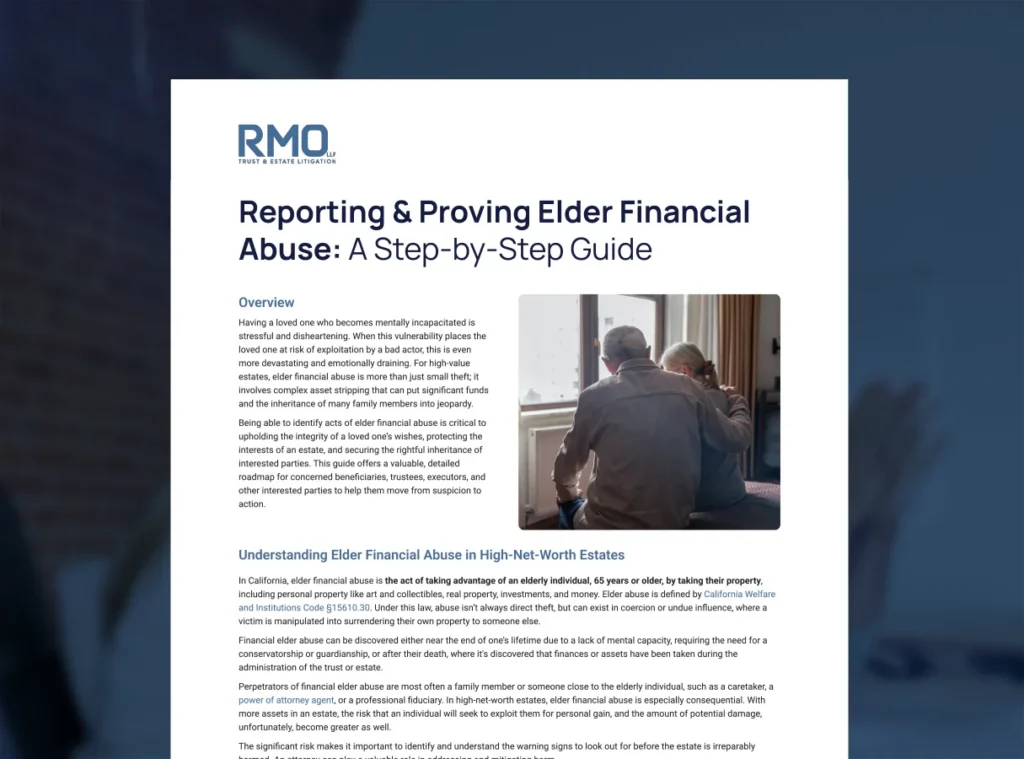
- Guide
Reporting & Proving Elder Financial Abuse: A Step-by-Step Guide
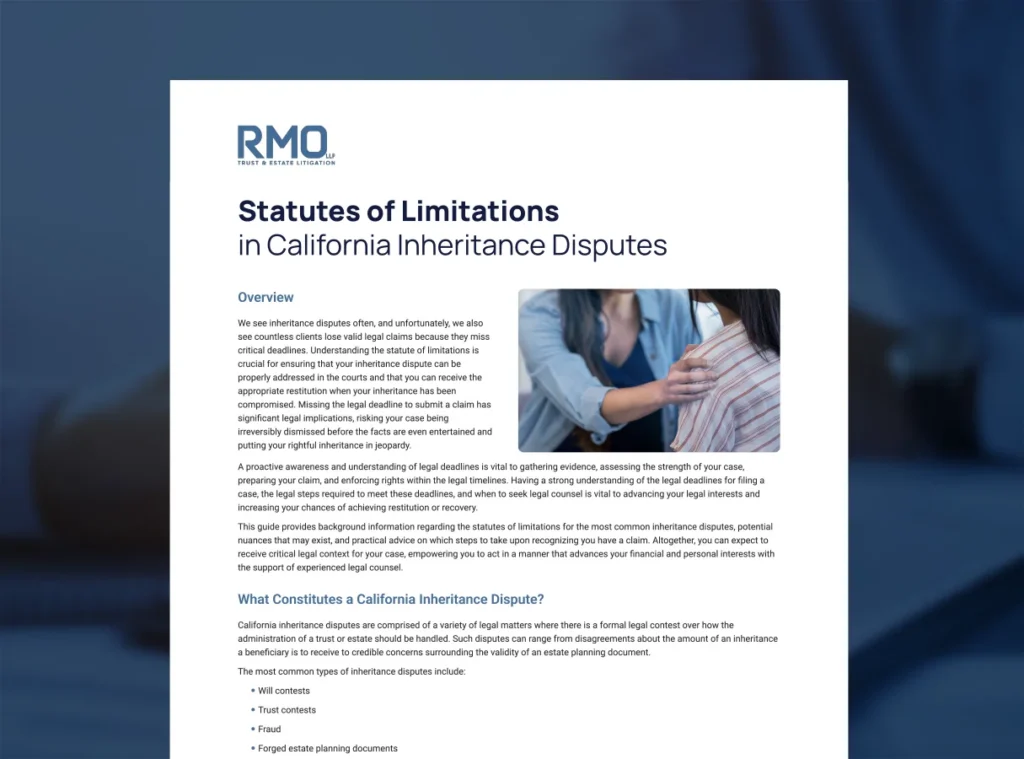
- Guide
Statutes of Limitations in California Inheritance Disputes
As Seen On





From Our Blog

- Media Mentions
- 1 min read
- Published on
In a recent article published by The Daily Upside, RMO LLP founding partner Scott Rahn discussed how the growing prevalence of cognitive decline, including [...]
In a recent article published by The Daily Upside, RMO LLP founding partner Scott Rahn discussed how the growing prevalence of cognitive decline, including […]
- News
- 2 min read
- Published on
RMO LLP Founding Partner Scott Rahn was recently quoted in a Moneywise article examining the legal challenges families may face when managing financial decisions [...]
RMO LLP Founding Partner Scott Rahn was recently quoted in a Moneywise article examining the legal challenges families may face when managing financial decisions […]
- News
- 2 min read
- Published on
In a recent USA TODAY article, RMO LLP partner Scott Rahn discussed the growing risk of inheritance and estate disputes involving adult children who [...]
In a recent USA TODAY article, RMO LLP partner Scott Rahn discussed the growing risk of inheritance and estate disputes involving adult children who […]

- Conservatorships
- 23 min read
- Published on
Key Takeaways Introduction When you have a family member who is no longer functioning at their full mental capacity or is unable to make [...]
Key Takeaways Introduction When you have a family member who is no longer functioning at their full mental capacity or is unable to make […]
- Undue Influence
- 16 min read
- Published on
Key Takeaways Introduction Undue influence is the act where one party takes advantage of the vulnerability of another for their own selfish gain at [...]
Key Takeaways Introduction Undue influence is the act where one party takes advantage of the vulnerability of another for their own selfish gain at […]

- Will Contest
- 12 min read
- Published on
Key Takeaways Introduction If you are planning on contesting a will or trust in California, there are specific deadlines you must follow for your [...]
Key Takeaways Introduction If you are planning on contesting a will or trust in California, there are specific deadlines you must follow for your […]

- Conservatorships
- 16 min read
- Published on
Key Takeaways Introduction Whether a person experiences mental incapacity or has a temporary travel arrangement, there are many situations that can arise and prevent [...]
Key Takeaways Introduction Whether a person experiences mental incapacity or has a temporary travel arrangement, there are many situations that can arise and prevent […]

- Will Contest
- 15 min read
- Published on
Executive summary Introduction A will contest is a common practice during probate if there are concerns about the document or the estate plan. However, [...]
Executive summary Introduction A will contest is a common practice during probate if there are concerns about the document or the estate plan. However, […]

- Probate Litigation
- 19 min read
- Published on
Executive Summary Introduction Being incapacitated indicates that someone is not able to care for themselves or understand the consequences of their own actions and [...]
Executive Summary Introduction Being incapacitated indicates that someone is not able to care for themselves or understand the consequences of their own actions and […]
- Trust Administration
- 7 min read
- Published on
Key Takeaways Introduction Helping a parent or loved one who has dementia or Alzheimer’s is always a challenging task. Considering and executing an estate [...]
Key Takeaways Introduction Helping a parent or loved one who has dementia or Alzheimer’s is always a challenging task. Considering and executing an estate […]

- Estate Litigation
- 6 min read
- Published on
Key Takeaways Introduction A person can contest a will if they believe the person who executed it was suffering from dementia or Alzheimer’s at [...]
Key Takeaways Introduction A person can contest a will if they believe the person who executed it was suffering from dementia or Alzheimer’s at […]

- Trust Litigation
- 6 min read
- Published on
Key Takeaways Introduction Dementia is a progressive neurodegenerative disease that causes the deterioration of certain mental faculties. Alzheimer’s disease is the most common form [...]
Key Takeaways Introduction Dementia is a progressive neurodegenerative disease that causes the deterioration of certain mental faculties. Alzheimer’s disease is the most common form […]

- News
- 4 min read
- Published on
Recent changes to Florida law have expanded protections for elderly persons and disabled adults by creating disinheritance penalties for abuse, neglect, exploitation, or aggravated [...]
Recent changes to Florida law have expanded protections for elderly persons and disabled adults by creating disinheritance penalties for abuse, neglect, exploitation, or aggravated […]

- Will and Trust Beneficiaries
- 8 min read
- Published on
If your loved one unexpectedly changed a will or trust, you might be wondering what to do. Or perhaps a family member recently passed [...]
If your loved one unexpectedly changed a will or trust, you might be wondering what to do. Or perhaps a family member recently passed […]
- Financial Elder Abuse
- 12 min read
- Published on
Elder financial abuse by family members is more common than you may think, and California courts have been cracking down on it more and [...]
Elder financial abuse by family members is more common than you may think, and California courts have been cracking down on it more and […]

- Undue Influence
- 10 min read
- Published on
Undue influence in families is an act of abuse, often by heirs victimizing their elderly parents or other family members to increase their will [...]
Undue influence in families is an act of abuse, often by heirs victimizing their elderly parents or other family members to increase their will […]

- Financial Elder Abuse
- 5 min read
- Published on
Financial elder abuse is a highly emotional situation, made that much more complicated by the fact that all-too-frequently the abuser is a family member. [...]
Financial elder abuse is a highly emotional situation, made that much more complicated by the fact that all-too-frequently the abuser is a family member. […]

- Financial Elder Abuse
- 8 min read
- Published on
There are few probate and trust situations as emotional as Financial Elder Abuse. Adding money, inheritance, and other assets to an abuse situation can [...]
There are few probate and trust situations as emotional as Financial Elder Abuse. Adding money, inheritance, and other assets to an abuse situation can […]

- Power of Attorney
- 7 min read
- Published on
Power of attorney grants the holder (the “agent”) to act on the behalf of another person (the “principal”), for the sake of their best [...]
Power of attorney grants the holder (the “agent”) to act on the behalf of another person (the “principal”), for the sake of their best […]
- Power of Attorney
- 2 min read
- Published on
Although we don’t like to think about it much, the simple fact is that we could become incapacitated or unable to communicate at any [...]
Although we don’t like to think about it much, the simple fact is that we could become incapacitated or unable to communicate at any […]
How We've Helped Familes
We have a longstanding reputation of protecting people and defending legacies.
$900,000 Estate Protected with Guardianship in Protection of Elder
Prevented exploitation of our clients’ vulnerable father at the hands of their brother by obtaining a permanent guardianship of the person, appointing our client as a guardian, and implementing visitation restrictions to prevent continued influence.
Trust Amendment Invalidated for Undue Influence
After trial, awarded a seven-figure judgment, plus attorney’s fees and costs on behalf of the elderly niece of the decedent, where auntie’s neighbor/caregiver used undue influence to connive her way into becoming the primary beneficiary of her trust shortly before she passed.
Refuted Forged Estate Planning Documents
Secured the estate of our client’s late father, who had been victimized by childhood friends who had forged estate planning documents to steal his estate from his family.
Invalidated Fraudulent Property Transfers
Secured return of our client’s home value after her daughter and son-in-law moved into the home under the guise of “helping” her, only to defraud her into signing documents signing her home over to them, after which they forced her out of her home.
Righted Caregiver “Girlfriend’s” Grift
Recovered the home of an infirm, institutionalized senior who had been victimized by his “girlfriend,” an opportunistic volunteer at his care facility, securing his golden years.
Online Romance Fraud Halted
Established an emergency conservatorship of the estate of a divorcee who had been ensnared by Nigerian fraudsters,who had infiltrated, isolated, defrauded and unduly influenced her into sending them millions, leaving her destitute and unable to buy food.
Frequently Asked Questions
Can someone with Alzheimer's still sign a will or trust?
Often, yes. The question is whether they had the required mental capacity when they signed. In California, the standard for a will is lower than the standard for creating a new trust, and a diagnosis alone doesn’t settle it. Read more.
Does a dementia diagnosis make a will or trust invalid?
Not by itself. California law looks at whether specific mental functions were impaired enough to affect the decision, not at the diagnosis alone. Evidence about timing, medical records, and who was involved usually decides these cases. Read more.
What's the difference between a power of attorney and a conservatorship?
A power of attorney is signed by your loved one while they still have capacity, naming someone they trust. A conservatorship is ordered by a court, usually after capacity is lost, and comes with ongoing court supervision. Read more.
What should I do if I think someone is taking advantage of a loved one with dementia?
Write down what you’ve noticed, keep copies of statements and documents, report concerns to Adult Protective Services or law enforcement, and speak with an attorney about stopping the abuse and recovering assets. Read the step-by-step guide.
How long do I have to challenge a will or trust?
It depends on the document and the state, and some deadlines are only a few months long. Don’t wait to get advice. Read more.
Concerned About a Loved One's Plan or Care?
Whether you’re worried about a recent change to a will or trust, a power of attorney being misused, or a family member who needs protection, our attorneys can help you understand your options. Serving clients across California and Texas.
Free Consultation
A member of the RMO Client Relations team will reach out to gather additional information concerning the parties to your case and schedule your consultation.
Communication Disclaimer
Please note that communications by you to RMO LLP or any of its lawyers through this website do not create an attorney-client relationship between you and the firm. Do not send any privileged or confidential information to the firm through this website or otherwise until instructed in writing from us to do so.