
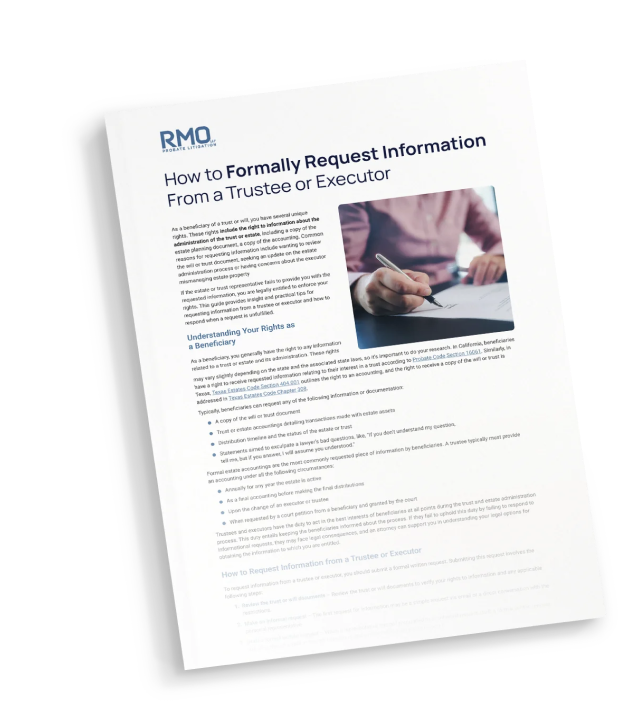
How to Formally Request Information From a Trustee or Executor (with Template)
Download Our Template to Request Information From an Executor or Trustee
Beneficiaries of a trust or will have a right to receive information about the estate administration process and may request information from a trustee or executor at any time. Our complimentary template helps you grasp the steps needed to navigate a request for information, ensure the responsible administration of your estate, and protect your family’s interests.
This resource provides an easy-to-understand starting point and clear template. If you need to formally request information from a trustee or executor, it’s wise to consult an estate administration attorney from RMO for guidance when submitting your request and following up.

What You'll Learn From This Guide
Our guide provides comprehensive information about how to request information and what you need to know to do so. This guide provides a detailed overview of your rights as a beneficiary and explains how to ensure they are protected.
You’ll learn the following:
- Your rights to information as a beneficiary or heir
- How to format your request for information from a trustee or executor
- What to do if a trustee or executor does not respond to your request
- When to engage the support of a trust or probate attorney
All together, this guide will prepare you to request crucial information regarding the details of a loved one’s trust or estate. This guide, in combination with the support of an attorney, equips you to receive the information you are entitled to during the trust administration or probate process.

How To Use This Guide and Template
This guide and the included information request template are simple to use, providing an educational resource on how to exercise your rights to information about a trust or estate. Read through the sections in this guide to understand your legal rights in the process, including what information you are entitled to, a representative’s fiduciary duty to provide it, and how you can move forward with requesting this information. Then, fill in the provided template with the details of your case to make your formal request to your estate’s representative.
Frequently Asked Questions
What information can a beneficiary request from a trustee or executor?
A beneficiary has a right to request multiple forms of information from a trustee or executor during the trust or estate administration process. Most commonly, beneficiaries may request information about the accounting of an estate or trust, including income, expenses, distributions, and the management of trust assets, such as real property sales or mortgage payments. A beneficiary can also request a copy of the will or trust document or the status of the estate administration process and its effect on the timeline for distributions.
How do I make a request for trust or estate information?
You can make a request for trust or estate information in several different ways, including by sending a written letter or an email to the trustee or executor. In the request, specify what information you are requesting, identify your rights to this information, and provide a deadline to respond. It’s advisable to make a formal request through either email or through certified mail so that you have a documented track record of the request.
What happens if a trustee or executor refuses to provide information?
If a trustee or executor refuses to provide information requested by a beneficiary, the beneficiary may petition the court for the information. If approved, this would compel the representative to provide the information. However, if the personal representative continues to fail to provide information, they may be considered in breach of their fiduciary duty. Breaching one’s fiduciary duties can result in the removal of the representative from their role or the fiduciary being subject to litigation.
Do beneficiaries have the right to see financial records and accountings?
Yes, beneficiaries generally have a legal right to see an accounting of trust or estate transactions in compliance with the state probate code. While a trustee is not required to provide financial records, such as bank or investment account statements, beneficiaries are entitled to receive an annual accounting that details trust or estate income, expenses, distributions, and asset management. They may also request an accounting at any point. Laws may vary slightly depending on the state, so it is advisable to consult with your attorney to verify your rights under your state’s laws and the instructions outlined in the estate planning documents.
When should I consult an attorney about problems with a trustee or executor?
Consult an attorney about problems with a trustee or executor as soon as they arise. Contacting an attorney as quickly as possible is critical for resolving disputes before they escalate. If there are grounds for a potential legal conflict, an attorney can help pursue a resolution. Similarly, if there is strong evidence that a trustee or executor is failing to uphold their duties in their role, an attorney may be able to help you navigate the necessary court processes for holding them accountable.
Free Consultation
A member of the RMO Client Relations team will reach out to gather additional information concerning the parties to your case and schedule your consultation.
Communication Disclaimer
Please note that communications by you to RMO LLP or any of its lawyers through this website do not create an attorney-client relationship between you and the firm. Do not send any privileged or confidential information to the firm through this website or otherwise until instructed in writing from us to do so.